
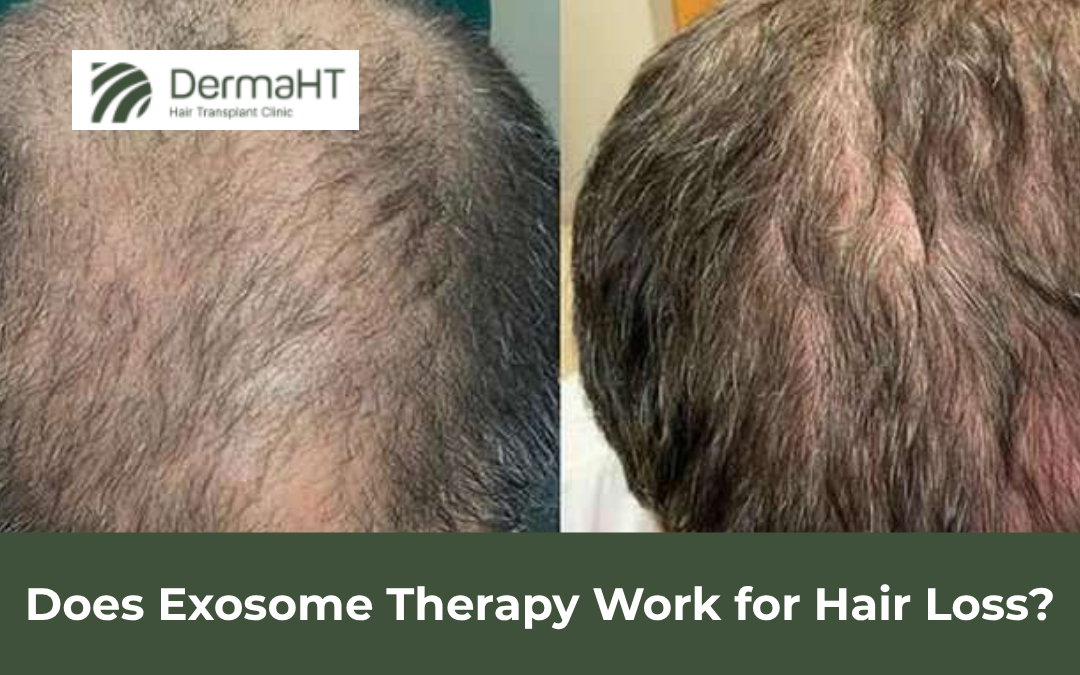
Exosome therapy shows promise as a non-surgical treatment for hair loss by using stem cell signalling molecules to wake dormant follicles, trigger natural growth pathways, and improve overall scalp density. Clinical studies report measurable density gains and reduced shedding within 3 to 6 months of starting treatment, with most patients seeing visible improvement after the second or third session. Outcomes depend on hair loss stage, prior treatment response, and how viable the existing follicle reserve actually is at the time of injection.
According to Dr. Nikitha Reddy, one of Hyderabad’s trusted dermatologists offering PRP Treatment in Hyderabad,
“Exosomes carry signals stem cells use to communicate with each other. We’re injecting biological messages into the scalp, not just nutrients, which is why response patterns differ from PRP.”
Curious whether exosomes suit your hair loss stage?
How does exosome therapy work for hair loss?
Exosome therapy works through a different biological mechanism compared to traditional PRP or GFC, since the active components signal follicles rather than directly nourishing them with growth factors alone.
Cellular communication. Exosomes act as messenger packets carrying instructions from stem cells to surrounding tissue, telling weakened follicles to repair, regenerate, and re-enter active growth phases through specific molecular signalling pathways.
Sourcing process. The exosomes used clinically come from purified mesenchymal stem cells in laboratory conditions, with the final injectable being cell-free and standardised, removing variability that can affect patient-derived treatments like PRP.
Scalp injection. The exosome solution is injected at multiple points across thinning zones using fine needles, with the doctor mapping injection grids beforehand to cover affected follicle clusters evenly across treatment areas.
Biological response. Within weeks of injection, treated follicles show reduced inflammation, improved blood supply, and signs of moving back into active growth, with visible density changes typically becoming noticeable after the second or third session.
Mechanism differences explain why responders and non-responders show up differently across these therapies, and our breakdown on PRP vs GFC covers why concentration and preparation method affect injection outcomes for hair loss patients.
Who is the right candidate for exosome therapy?
Exosome therapy isn’t a one-size-fits-all solution. Patient selection plays a major role in whether the treatment delivers visible improvement or fails to meet expectations.
Early to moderate thinning. Patients with Norwood Grade 1 to 4 in men or Ludwig Grade 1 to 2 in women respond best, since the treatment needs viable follicles to signal back to, and complete baldness offers nothing for the exosomes to act upon.
PRP and GFC non-responders. Some patients show minimal response to PRP or GFC despite multiple sessions, and switching to exosome therapy sometimes triggers a response because the signalling-based mechanism reaches follicles that growth factor saturation didn’t activate.
Post-transplant patients. Exosomes added during the early recovery window after FUE or FUT often improve graft survival and accelerate regrowth, since the signalling helps transplanted follicles integrate with the new blood supply more efficiently.
Sensitive scalp profiles. Patients with sensitive scalps or those who experienced post-injection inflammation from PRP often tolerate exosomes better, since the cell-free preparation eliminates the inflammatory reaction triggered by residual blood components.
Realistic expectations matter as much as treatment selection, and our FUE recovery timeline blog also covers when and why injectable therapies get added during post-surgery recovery to support graft results.
Why Choose Dr. Nikitha Reddy?
Dr. Nikitha Reddy is an MD Dermatologist with 6+ years of hair restoration experience registered with Telangana State Medical Council (TSMC/FMR/04492), and every patient considering exosome therapy at DermaHT goes through a hair loss staging assessment and prior-treatment review before being cleared for the injection rather than being booked in by default. Patients are sometimes told their hair loss has progressed beyond what exosomes can meaningfully treat, because honest treatment matching protects results far more than recommending the newest therapy as a default answer.
📞 Call Now: +91 90639 77407
Frequently Asked Questions
How is exosome therapy different from PRP?
Exosomes use stem cell signalling, while PRP uses platelet growth factors directly.
How many exosome sessions are needed for results?
Most patients need 3 to 4 sessions spaced 4 weeks apart.
Is exosome therapy safe for hair loss?
Cell-free preparations have shown strong safety profiles in clinical use so far.
Can exosomes regrow hair on bald patches?
Exosomes work on weakened follicles, not on completely bald scalp areas.
References:
- National Center for Biotechnology Information. Exosomes in Hair Restoration Therapy. https://www.ncbi.nlm.nih.gov/pmc/articles/PMC8743393/
- International Society of Hair Restoration Surgery. Regenerative Hair Loss Therapies. https://ishrs.org/