
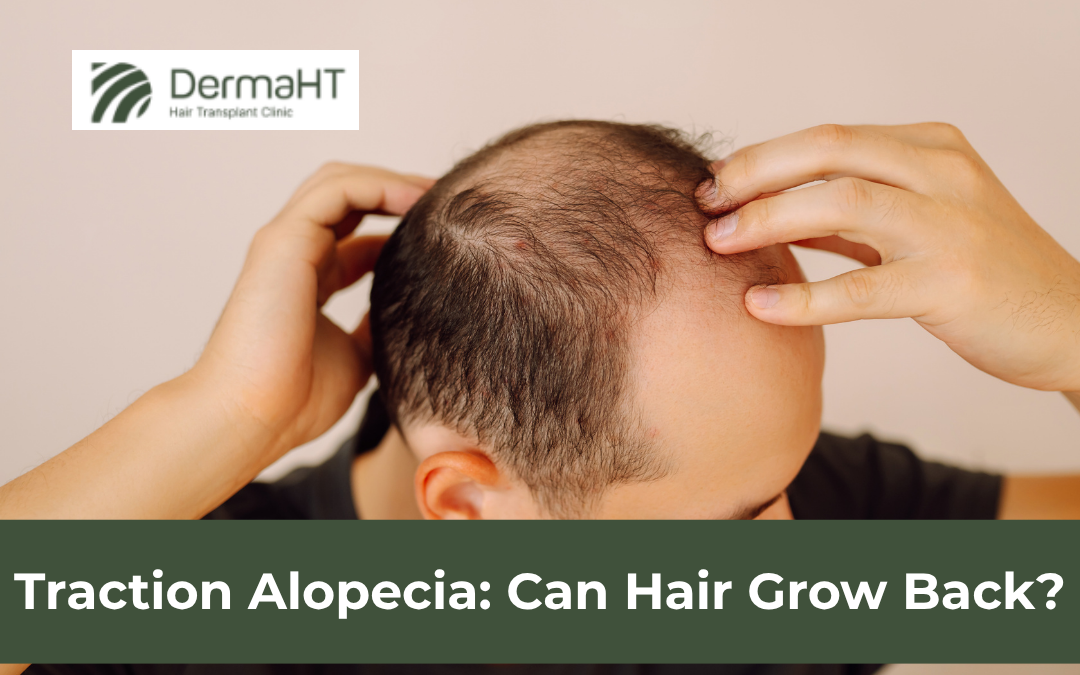
Traction alopecia is hair loss caused by constant pulling on the roots, usually from tight hairstyles or headwear. Caught early, it’s reversible, and the hair grows back once the tension is removed. Left for years, the follicles scar over, and that loss becomes permanent. The deciding factor is how long the pulling has been going on before it’s addressed.
According to Dr. Nikitha Reddy, an MD Dermatologist offering Hair Transplant in Hyderabad, “Traction alopecia is one of the few types of hair loss you can often undo, but only while the follicle is still alive. The early signs, tiny bumps and broken hairs along the hairline, are the window. Once it scars, that window is closed.”
Seeing thinning along your hairline from tight styles?
Can traction alopecia hair grow back?
In its early stages, yes. The follicles are stressed, not destroyed, so removing the cause usually lets the hair return over a few months.
Take off the tension. The first and most important step is loosening or stopping the styles and headwear doing the pulling, since nothing regrows while the strain continues.
Minoxidil to restart growth. Topical minoxidil is often used to push stressed follicles back into active growth and speed up regrowth once the tension is gone.
Calm the inflammation. Where there’s redness or folliculitis, a doctor may add topical or injected steroids, and antibiotics if the follicles are infected.
Give it months, not weeks. Regrowth is gradual, and it can take several months of consistent change before density along the hairline visibly recovers.
Stubborn early cases sometimes need a nudge beyond minoxidil, which is where a regenerative option like PRP can support the follicles still capable of bouncing back.
When does traction alopecia become permanent?
The reversible window doesn’t stay open forever. Past a certain point, the follicle is replaced by scar tissue and can’t regrow on its own.
Years of constant pulling. The longer the tension continues, the more follicles are lost for good, which is why chronic cases respond far less to treatment.
A smooth, shiny scalp. Once the affected area looks bare and shiny with no visible follicle openings, the follicles there have usually scarred over.
No response to treatment. When tension is removed and minoxidil is tried for months with no regrowth, the loss in that zone is likely permanent.
Where surgery comes in. Permanent traction loss along the hairline can be rebuilt with a transplant, provided the pulling has stopped and the area is stable.
Because traction tends to strike the front and temples, restoring it is really hairline work, and our guide on rebuilding a receding hairline covers how that edge is designed.
Why Choose Dr. Nikitha Reddy?
Dr. Nikitha Reddy is an MD Dermatologist registered with the Telangana State Medical Council (TSMC/FMR/04492), with 6+ years in hair restoration. The first thing assessed at DermaHT is whether the follicles are still active or already scarred, because that single distinction decides whether you need treatment to regrow hair or surgery to replace it. Catching it early is always the simpler route.
📞 Call Now: +91 90639 77407
Frequently Asked Questions
Is traction alopecia reversible?
Yes, if caught early and the pulling stops before scarring sets in.
How long does traction alopecia take to regrow?
Usually several months of reduced tension and treatment.
Can a hair transplant fix traction alopecia?
Yes, for permanent cases, once the area is stable and tension-free.
What does early traction alopecia look like?
Thinning, broken hairs, and small bumps along the hairline.
Disclaimer:
This blog is for educational purposes only and is not a substitute for professional medical advice.
Please consult a qualified doctor for guidance specific to your case.