
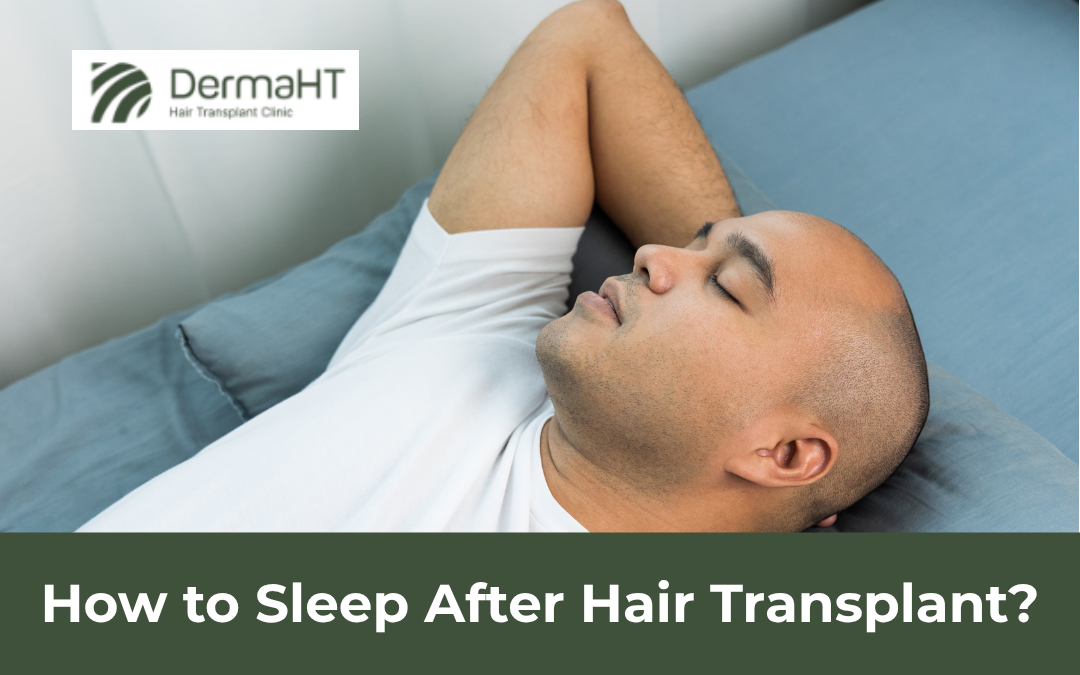
How you sleep in the first week after a hair transplant has a real effect on how well the grafts settle. The safe setup is simple: sleep on your back with your head raised to about 30 to 45 degrees, and keep the transplanted area off the pillow. This protects the new grafts while they’re still fragile and lets swelling drain away from your face. After roughly ten days to two weeks, once the grafts are anchored, you can go back to your usual position.
According to Dr. Nikitha Reddy, an MD Dermatologist offering Hair Transplant in Hyderabad, “The first few nights decide a lot. Grafts aren’t locked in yet, so one night face-down on the pillow can undo careful work. Back-sleeping with the head raised isn’t fussy advice, it’s graft protection.”
Heading into your recovery week and not sure how to set up?
What is the safest way to sleep after surgery?
The goal for the first week is steady, slightly raised, and zero pressure on the grafts. A few things make that easy to hold through the night.
Sleep on your back. Lying face-up keeps the recipient area off the pillow entirely, which is the single biggest thing protecting the grafts while they settle.
Raise your head 30 to 45 degrees. A wedge pillow, two or three firm pillows, or a recliner holds your head above heart level so fluid drains away from the forehead instead of pooling there overnight.
Use a U-shaped travel pillow. Cradling the neck stops your head from rolling sideways in your sleep, which is how most people accidentally end up pressing grafts into the pillow.
Protect the bedding. Grafts can ooze a little the first night or two, so an old pillowcase or a dark towel saves your sheets and saves you the worry.
The recipient area needs the most care here, since that’s where the new grafts sit, and protecting it through those first nights is what gives an FUE result the best chance to settle.
How long do you have to sleep this way?
This routine isn’t forever. Each phase loosens up as the grafts get more secure.
First 72 hours. Grafts are at their most fragile. Strict back-sleeping and elevation matter most now, and this is also when facial swelling tends to build.
Days 3 to 4. Swelling usually peaks around now, which is when the raised head position earns its keep, letting gravity carry fluid down and away.
Days 7 to 10. The grafts start anchoring into the scalp. You can ease off a little, though most surgeons still want you off your side and stomach.
Days 10 to 14. Most patients return to their normal sleeping position once the grafts are secure, though your own surgeon’s timeline is the one to follow.
Sleep is one slice of the early healing window, and the day-by-day markers in our FUT recovery guide show what else to expect alongside it.
Why Choose Dr. Nikitha Reddy?
Dr. Nikitha Reddy is an MD Dermatologist with 6+ years in hair restoration. Patients at DermaHT leave with clear written aftercare for the first two weeks, sleep setup included, because good surgery and good recovery go hand in hand.
📞 Call Now: +91 90639 77407
Frequently Asked Questions
Can I sleep on my side after a hair transplant?
Not for the first 7 to 10 days. Side sleeping can press grafts against the pillow.
How many pillows should I use after surgery?
Two or three firm pillows, or a wedge, to hold a 30 to 45 degree angle.
When can I sleep normally again?
Most patients return to their usual position after 10 to 14 days.
Does sleeping upright really reduce swelling?
Yes, a raised head lets fluid drain away from the forehead and eyes overnight.
References :
National Center for Biotechnology Information. Hair Transplantation: Preventing Post-operative Oedema. https://pmc.ncbi.nlm.nih.gov/articles/PMC2956963/
National Center for Biotechnology Information. Complications in Hair Transplantation. https://pmc.ncbi.nlm.nih.gov/articles/PMC6371733/