
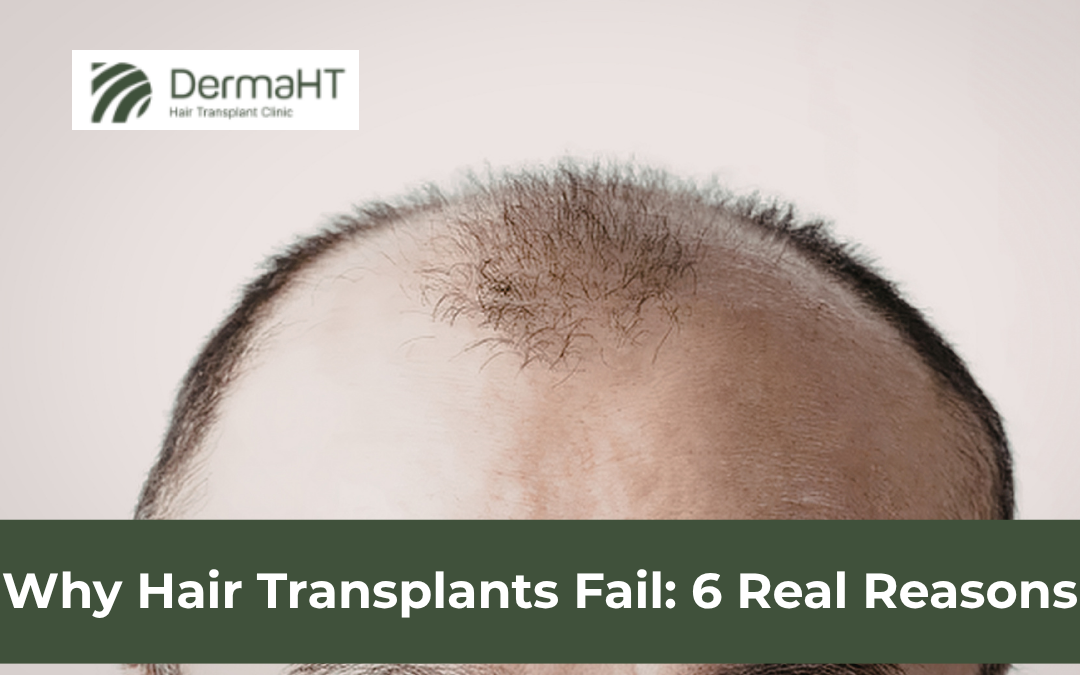
Hair transplant failure is uncommon, but when it happens the cause is almost always identifiable. Most failures trace back to who was operated on, how the surgery was done, or how the grafts were cared for afterwards. The transplant itself rarely fails at random. Knowing the six real reasons makes nearly all of them avoidable.
According to Dr. Nikitha Reddy, an MD Dermatologist offering Hair Transplant in Hyderabad, “A transplant doesn’t usually fail on the table, it fails in the decisions around it. Wrong patient, wrong plan, or careless aftercare. Get those right and the grafts almost always grow.”
Worried a past transplant didn’t take?
What are the reasons tied to the patient and the plan?
Plenty of failures are decided before surgery even begins, in the assessment and the planning.
The cause was never diagnosed. Transplanting over an undiagnosed or active condition, like ongoing aggressive pattern loss or a scarring alopecia, means the new hair sits in failing ground and the result unravels.
Not enough donor hair. A thin or unstable donor area can’t supply what the bald zone needs, so coverage ends up sparse and the donor itself looks depleted.
A plan that ignored the future. Designing a low, dense hairline for a young patient still losing hair leaves an unnatural island as the surrounding hair keeps receding.
This is why a sound FUE begins with candidacy and a donor assessment, not with booking a surgery date.
What are the reasons tied to technique and aftercare?
The rest come down to execution, both in the chair and in the weeks that follow.
Poor surgical technique. Grafts placed at the wrong angle, cut during extraction, or packed too aggressively survive poorly and can look unnatural, which is where experience shows.
Mishandled grafts. Follicles left out of the body too long, allowed to dry, or handled roughly lose viability before they’re ever placed.
Neglected aftercare. Infection, knocking grafts loose in the first days, or smoking all starve or dislodge the new hair before it takes hold.
When a transplant does fail, the damage is often fixable, and our guide on whether you can get a second transplant covers what corrective work involves.
Why Choose Dr. Nikitha Reddy?
Dr. Nikitha Reddy is an MD Dermatologist registered with the Telangana State Medical Council (TSMC/FMR/04492), with 6+ years in hair restoration. Most of what makes a transplant fail is screened out before surgery at DermaHT, through diagnosis, donor assessment, and an honest talk about what the result can and can’t be. It’s also worth knowing that early shedding is normal, and what looks like failure at three months is often just the hair on its way back.
📞 Call Now: +91 90639 77407
Frequently Asked Questions
How common is hair transplant failure?
Uncommon. Most failures trace to candidacy, technique, or aftercare.
Can a failed hair transplant be fixed?
Often yes, with corrective surgery once the cause is understood.
Does shedding after surgery mean it failed?
No. Early shedding is normal, and the hair usually regrows.
How do I avoid a failed transplant?
Choose an experienced surgeon and follow aftercare closely.
Disclaimer: This blog is for educational purposes only and is not a substitute for professional medical advice. Please consult a qualified doctor for guidance specific to your case.
Disclaimer:
This blog is for educational purposes only and is not a substitute for professional medical advice.
Please consult a qualified doctor for guidance specific to your case.