
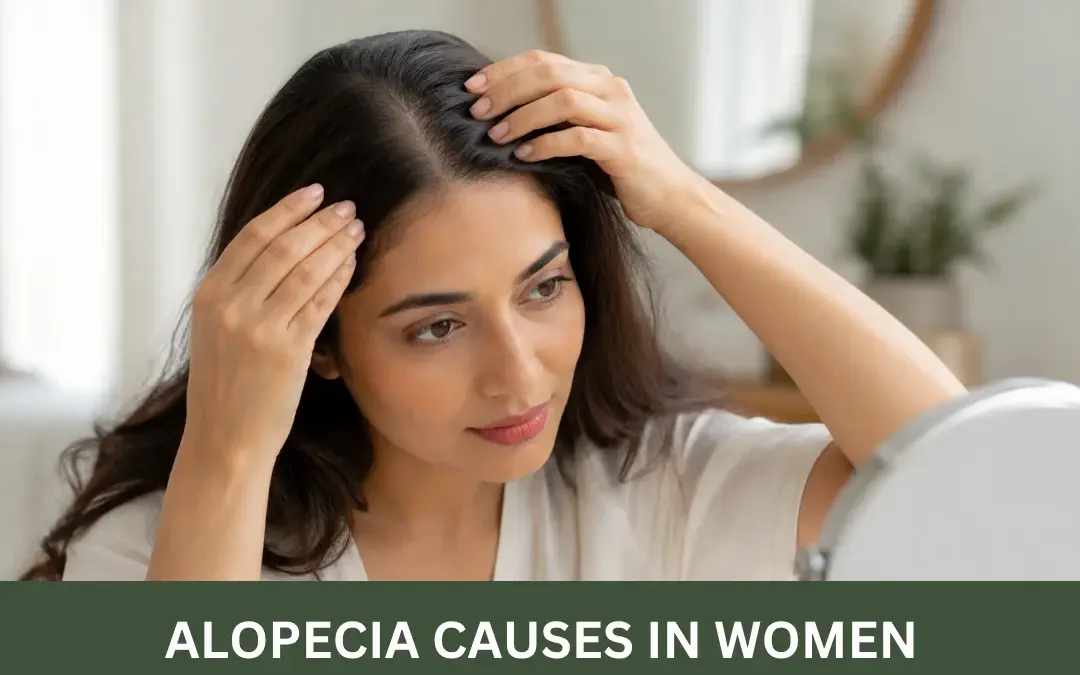
If you have noticed more hair on your pillow, in the shower drain, or on your hairbrush lately, you are not imagining things, and you are certainly not alone. Alopecia in females is far more common than most people realise, and the causes behind it are rarely just one thing.
At DermaHT, one of the trusted names for hair transplant in Hyderabad, Dr Nikitha Reddy, MD Dermatologist, sees female patients every week who are confused about why their hair is thinning even though nothing in their routine has changed. This blog breaks down the actual causes of alopecia in females, in plain language, so you know what might be happening before you panic or reach for another product.
What is Alopecia? A Quick Explanation
Alopecia simply means hair loss. It is not one single condition. It is an umbrella term that covers several different patterns and reasons for hair thinning or shedding.
In females, alopecia typically shows up as:
- Overall thinning across the scalp, rather than a receding hairline
- Widening of the centre parting
- More visible scalp, especially at the crown
- Increased shedding during washing or combing
Understanding which pattern you are dealing with is the first step. Dr Nikitha Reddy usually starts every consultation with a scalp examination to identify the pattern before discussing causes.
Common Causes of Alopecia in Females

There is rarely a single cause. Most female patients have two or three overlapping factors contributing to their hair fall.
Hormonal Changes
Hormones play a bigger role in female hair loss than most people expect. Fluctuations during pregnancy, postpartum recovery, perimenopause, or thyroid imbalance can all disturb the hair growth cycle and push more follicles into a resting or shedding phase.
Genetics (Female Pattern Hair Loss)
Just like men, women can inherit a genetic tendency toward thinning hair. This is known as female pattern hair loss, and it usually shows up as gradual thinning at the crown and widening part line rather than a receding hairline.
Hormonal Changes
Hormones play a bigger role in female hair loss than most people expect. Fluctuations during pregnancy, postpartum recovery, perimenopause, or thyroid imbalance can all disturb the hair growth cycle and push more follicles into a resting or shedding phase.
Nutritional Deficiencies
Low iron, vitamin D, B12, or protein intake can weaken the hair growth cycle. Crash dieting or restrictive eating patterns are common triggers, especially in younger women.
Stress and Telogen Effluvium
A significant physical or emotional stressor, such as illness, surgery, childbirth, or a major life event, can trigger a condition called telogen effluvium. This causes noticeable diffuse shedding two to three months after the triggering event.
Hairstyling and Traction
Tight ponytails, buns, braids, and frequent chemical treatments can cause traction alopecia over time, particularly along the hairline and temples.
Doctor's Quote
“Female hair loss is almost never explained by just one factor. I have had patients blame their shampoo for months when the real cause was an undiagnosed thyroid issue. That is why a proper scalp and health assessment always comes before any treatment recommendation.” — Dr Nikitha Reddy, MD Dermatologist, DermaHT Hair Transplant Clinic, Kokapet, Hyderabad
When Should You See a Doctor for Female Hair Loss?
Some shedding is completely normal. On average, losing 50 to 100 strands a day is expected. You should consider a professional opinion if you notice:
- Sudden or excessive shedding that lasts more than a few weeks
- Visible thinning at the crown or widening parting
- Bald patches, especially round or coin shaped ones
- Hair loss accompanied by fatigue, weight changes, or irregular periods
Dr Nikitha Reddy recommends getting a proper scalp assessment rather than self-diagnosing through the internet, since the treatment approach depends entirely on the underlying cause.
How is Alopecia in Females Diagnosed?

At DermaHT Hair Transplant Clinic, diagnosis usually involves:
- A detailed history of diet, stress, hormonal changes, and hairstyling habits
- Trichoscopy to examine follicle density and scalp condition closely
- Blood tests for thyroid, iron, and vitamin levels where needed
This process helps identify whether the cause is temporary, like telogen effluvium, or more long term, like genetic thinning, so the right approach can be planned instead of a guessing game.
What Are the Treatment Options?
Depending on the cause, options may include correcting nutritional deficiencies, hormonal management, topical treatments, or non-surgical procedures such as PRP or GFC to support existing follicles. In cases of long-standing pattern hair loss with no active regrowth response, a hair transplant in Hyderabad may also be discussed as a longer-term option, but only after the underlying cause has been addressed first.
Quick Reference: Alopecia Causes at a Glance
Non-surgical options like GFC are also commonly recommended alongside these causes once the diagnosis is confirmed.
|
Cause |
Typical Pattern |
Common Trigger |
|
Hormonal changes |
Diffuse thinning |
Pregnancy, postpartum, perimenopause, thyroid |
|
Genetics |
Crown thinning, wide parting |
Family history |
|
Nutritional deficiency |
Overall weak, thin hair |
Low iron, B12, protein |
|
Telogen effluvium |
Sudden diffuse shedding |
Stress, illness, surgery |
|
Traction alopecia |
Hairline and temple thinning |
Tight hairstyles |
|
Medical conditions |
Varies (patchy or diffuse) |
PCOS, thyroid, autoimmune |
Your Hair is Trying to Tell You Something. Let’s Actually Listen.
Conclusion
Alopecia in females is rarely about one bad habit or one wrong product. It is usually a combination of hormones, genetics, nutrition, and lifestyle working against your hair at the same time. Understanding the real cause is what makes any treatment plan actually work.
If your hair fall has been bothering you for a while, it may be worth getting your scalp properly assessed rather than trying another round of home remedies. You can visit DermaHT Hair Transplant Clinic in Kokapet, Hyderabad, for a proper scalp and hair loss evaluation with Dr Nikitha Reddy.
Skip the Guesswork. Get Your Scalp Read by Someone Who Knows Hair.
Frequently Asked Questions
What is the most common cause of hair loss in women?
Hormonal changes and genetic female pattern hair loss are among the most common causes, though nutritional deficiencies and stress-related shedding are also very frequent.
Can alopecia in females be reversed?
It depends on the cause. Temporary conditions like telogen effluvium and nutritional deficiencies often improve once corrected. Genetic pattern hair loss can be managed and slowed but usually needs ongoing treatment.
Is female hair loss different from male hair loss?
Yes. Women typically experience diffuse thinning across the scalp and a widening parting, while men more commonly see a receding hairline and crown balding.
Does stress really cause hair loss in women?
Yes. Significant physical or emotional stress can push hair follicles into a resting phase, leading to noticeable shedding a few months later. This is medically known as telogen effluvium.
When should I worry about hair loss and see a dermatologist?
If shedding continues beyond a few weeks, you notice visible thinning or bald patches, or hair loss comes with other symptoms like fatigue or irregular periods, it is best to get a professional scalp assessment rather than waiting it out.
References :
- American Academy of Dermatology Association — www.aad.org
- National Institutes of Health (NIH) — www.ncbi.nlm.nih.go