
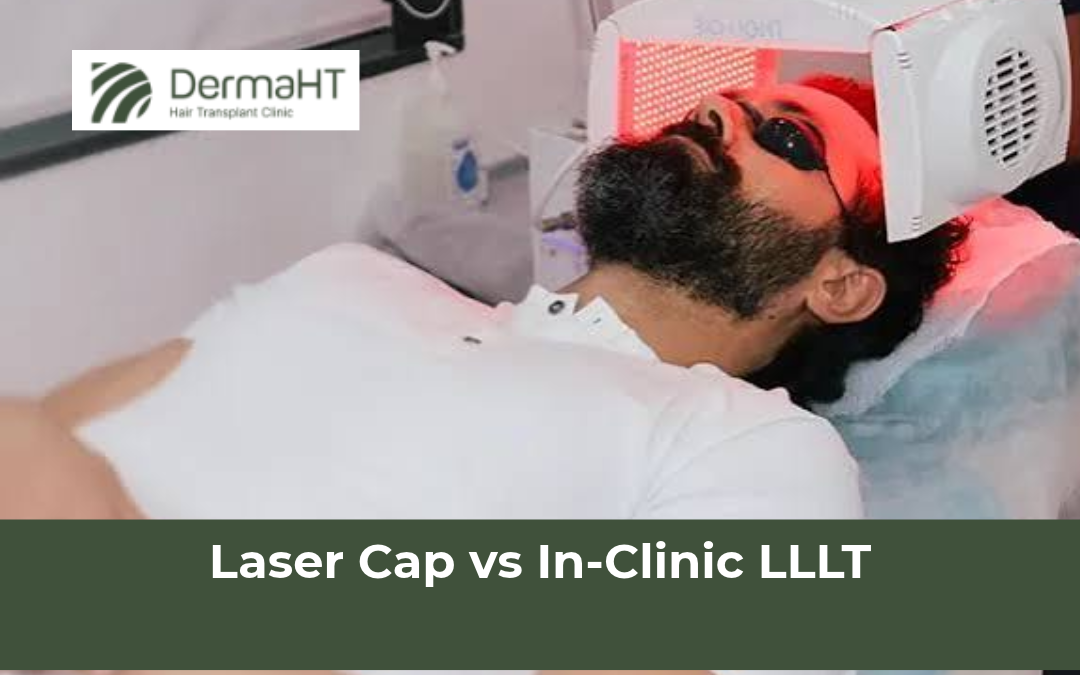
Neither one is clearly stronger. Both use the same kind of low-level red light, and studies mostly show benefit in early pattern hair loss when the sessions are kept up regularly. A laser cap is convenient but depends on you using it on schedule at home, while in-clinic LLLT is supervised and follows a proper scalp check. Which one works better for you comes down mostly to your stage of hair loss and how consistently you can stick with it.
According to Dr. Nikitha Reddy, a Dermatologist and Hair Transplant Surgeon in Kokapet, Hyderabad, “A lot of people ask me if the cap they can use at home is just a cheaper version of what we do in clinic. Not exactly, and not necessarily worse either. The light is the same kind. What changes is who checks your scalp, whether the diagnosis is right in the first place, and whether the sessions actually happen on time. A cap that sits in a drawer does nothing. I’d rather a patient follow a plan they can genuinely keep up.”
Not sure whether a laser cap or in-clinic LLLT suits your stage of hair loss?
How Do a Laser Cap and In-Clinic LLLT Differ?
- Where and how often: A cap is used at home on a regular routine, while in-clinic sessions are scheduled visits handled by the clinic team.
- Consistency: Results depend on regular use, and home devices often fail simply because they get skipped.
- Supervision: In the clinic, your scalp is examined first and progress is tracked, whereas with a cap you’re mostly judging results yourself.
- Device quality and cost: Power, wavelength and coverage vary widely between devices, and good caps carry a high upfront price.
If you’d like to understand how the treatment works before choosing, our page on LLLT for hair loss in Hyderabad explains it in detail.
Which One Is Right for Your Stage of Hair Loss?
- Early thinning or a widening parting: This is where LLLT has the most evidence behind it, and either route can be considered.
- Advanced baldness: Neither option brings back hair in areas where follicles are already gone, and a transplant discussion may be more realistic.
- A busy or travel-heavy schedule: A cap can fit around your routine, but only if you’ll really use it as directed.
- Already on other treatments: Studies have looked at LLLT alongside minoxidil or finasteride, so it’s often used as an add-on and not a stand-alone fix.
Some patients are also advised to pair LLLT with other therapies, such as PRP treatment in Hyderabad, depending on what the scalp assessment shows.
What Determines the Right Choice Between a Laser Cap and In-Clinic LLLT?
- The actual cause of hair loss: LLLT is studied mainly in pattern hair loss, so the cause should be confirmed before you invest in a device.
- How advanced the thinning is: Early stages respond better, and bare, shiny areas usually don’t.
- How consistent you can be: A routine you can’t maintain will beat even the best device.
- Device specifications: Wavelength, coverage and treatment time differ between caps, and thick or long hair can get in the way of the light.
- Other treatments in your plan: LLLT often works best as part of a combined plan.
- Budget over several months: Results take time, so think about the full course and not a single session.
Frequently Asked Questions
Is a laser cap as effective as in-clinic LLLT?
There’s no strong head-to-head evidence between the two. Trials of home-use devices have shown better hair density than sham devices, and results depend heavily on using the treatment regularly and on device quality.
How long does LLLT take to show results?
It’s a slow process. Studies usually measure changes over several months, so expect to follow the plan for a while before judging whether it’s working.
Is a laser cap as effective as in-clinic LLLT?
There’s no strong head-to-head evidence between the two. Trials of home-use devices have shown better hair density than sham devices, and results depend heavily on using the treatment regularly and on device quality.
Does LLLT have side effects?
Reviews describe it as generally safe and painless. Some people notice mild scalp dryness or irritation, and a temporary increase in shedding early on is sometimes reported.
Disclaimer:
This blog is for educational purposes only and is not a substitute for professional medical advice.
Please consult a qualified doctor for guidance specific to your case.