
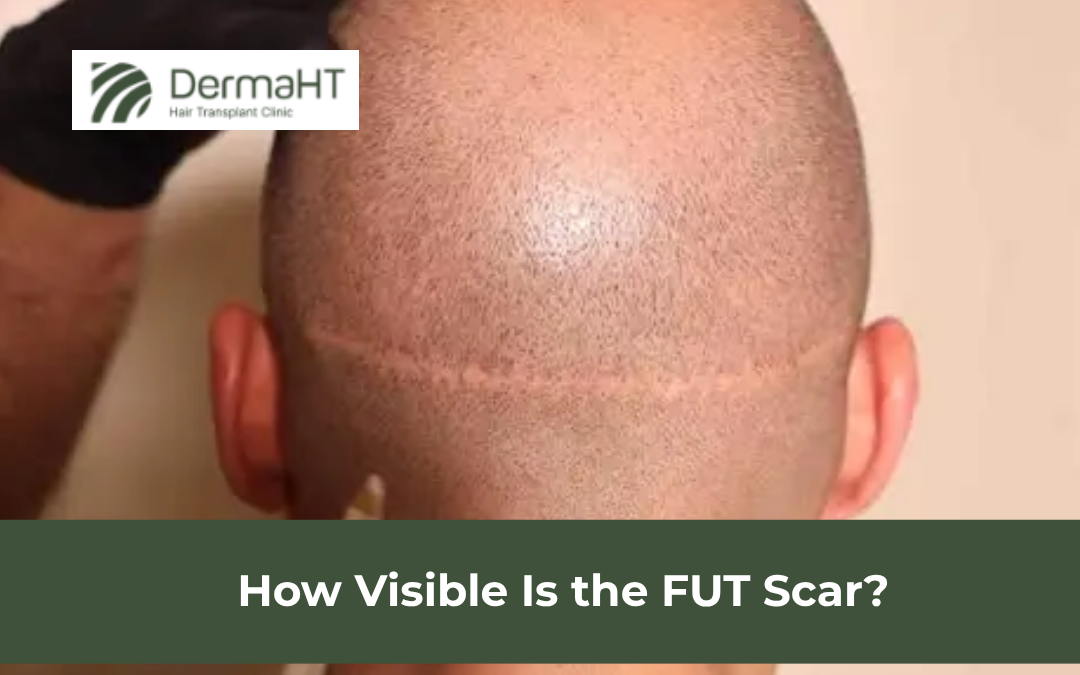
This is a thin horizontal line that sits along the back of the scalp where the donor strip was removed and stitched closed during FUT surgery. Scar width usually settles between 1 mm and 3 mm with proper closure, and stays hidden under hair longer than around 1 cm. Closure technique, suture tension, scalp elasticity, and post-op care decide whether the line fades into surrounding hair or stays visible long term.
According to Dr. Nikitha Reddy, one of Hyderabad’s trusted dermatologists offering FUE Hair Transplant in Hyderabad,
“A good FUT scar is one the patient eventually forgets exists. Wide stretched scars usually come from rushed closure, and that’s a surgeon problem, not a technique problem.”
What decides how visible the FUT scar becomes?
Scar visibility isn’t down to luck. It’s shaped by surgical decisions made during closure, plus how the scalp responds while healing in the weeks that follow.
Closure technique. Trichophytic closure allows hair to grow through the scar line itself, which is the single most important factor in helping the mark blend with surrounding hair instead of reading as a pale visible stripe.
Suture tension. Closing the wound under tight pressure stretches the scar wider during healing, while a relaxed closure lets the skin edges knit cleanly together and keeps the final line as narrow as possible.
Scalp elasticity. Skin behaves differently in different patients, so those with tighter scalps usually heal with slightly wider scars compared to people whose skin moves more freely, regardless of how skilled the surgeon happens to be.
Post-op care. Avoiding heavy lifting, neck strain, and aggressive scalp movement during the first few weeks protects the closure line from widening while healing is still actively happening underneath.
Scar outcomes get planned inside the operating room itself, and a properly executed FUE hair transplant or FUT always begins with a clear discussion about closure strategy before surgery starts.
How do patients hide or reduce the FUT scar?
A wider scar doesn’t have to stay obvious forever. There are several proven ways to bring down visibility or cover the line entirely if it becomes a concern later.
Hair length above 1 cm. Keeping hair longer than one centimetre at the back covers any standard FUT scar fully, which is why most surgeons advise patients to avoid permanently short crew cuts or full shaves after the procedure.
Scalp micropigmentation. This is a tattoo technique where pigment gets matched to surrounding follicle shadows, camouflaging a visible scar line so effectively that even shaved heads can mask older FUT marks convincingly.
FUE into the scar. Follicular units can be implanted directly into the FUT scar tissue to push hair growth through it, which softens or breaks up the line visually for patients who want to keep their hair very short.
Revision surgery. A widened scar can sometimes be surgically revised and closed again more cleanly, though this works best while the scar is still fresh and becomes less effective once mature scar tissue has fully formed.
Most patients never need any of these interventions, and choosing between techniques upfront matters as much as managing a scar later, which our breakdown on FUE vs FUT covers in depth.
Why Choose Dr. Nikitha Reddy?
Dr. Nikitha Reddy is an MD Dermatologist with 6+ years of hair transplant experience registered with Telangana State Medical Council (TSMC/FMR/04492), and every FUT case at DermaHT is closed using trichophytic technique under controlled tension to keep the final scar narrow and hair-covered as much as clinically possible. Patients are shown exactly where the closure line will sit before surgery begins, because knowing what to expect is part of how honest hair transplant care actually works.
Frequently Asked Questions
1.How wide is a typical FUT scar?
A well-closed FUT scar sits between 1 mm and 3 mm wide.
2. Can the FUT scar be completely removed?
Complete removal isn’t possible, though scalp micropigmentation hides it very effectively.
3. Will the scar show when I wear short hair?
Hair shorter than 1 cm may expose part of the scar line.
4. Does hair grow back on the FUT scar?
Native hair doesn’t regrow on scar tissue, though FUE grafts can.
References:
- National Center for Biotechnology Information. Trichophytic Closure in Hair Restoration Surgery. https://www.ncbi.nlm.nih.gov/pmc/articles/PMC4171912/
- International Society of Hair Restoration Surgery. FUT Scar Management Guidelines. https://ishrs.org/