
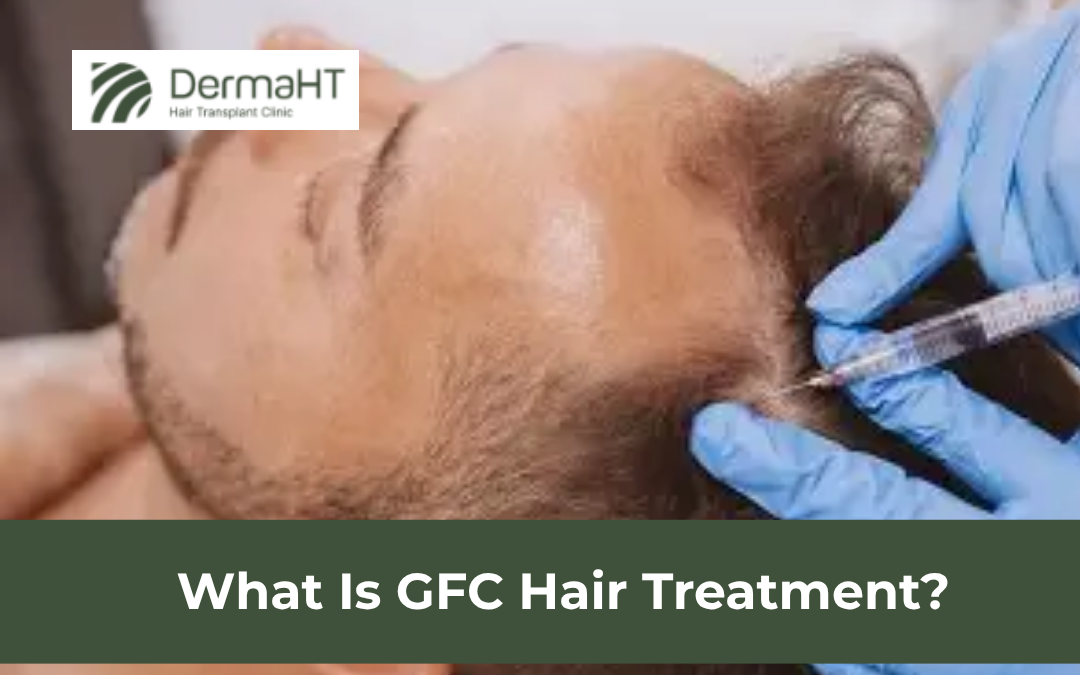
This is a growth factor concentrate therapy where a specific layer of the patient’s own blood plasma gets isolated and injected into the scalp to strengthen weak follicles and trigger fresh hair growth. GFC delivers a higher concentration of growth factors compared to standard PRP, since the preparation method removes red and white blood cells more thoroughly. The treatment suits early to moderate hair thinning, post-transplant follicle support, and patients who want a non-surgical option before considering FUE.
According to Dr. Nikitha Reddy, one of Hyderabad’s trusted dermatologists offering GFC Treatment in Hyderabad,
“GFC isn’t a magic shot. It works on follicles that are still alive but weakening, which is why timing the treatment matters as much as the injection itself for getting actual results.”
Dealing with thinning that hasn’t reached baldness yet?
How does GFC hair treatment actually work?
GFC therapy works by delivering concentrated growth factors directly into the follicle environment, where they signal weakened follicles to re-enter active growth phases. The full mechanism plays out across four stages.
Blood collection. A small sample of the patient’s blood gets drawn, usually 10 to 20 ml depending on scalp area being treated, which is then processed in a closed system to isolate the growth factor layer cleanly.
Concentration step. The processing step separates and concentrates platelet-derived growth factors, removing other blood components so the final injectable carries 4 to 6 times higher concentration than basic PRP preparations would deliver.
Scalp injection. The concentrate is injected at multiple points across thinning zones using fine needles, with the doctor mapping injection grids beforehand to cover affected follicle clusters evenly across the scalp surface.
Follicle stimulation. Growth factors signal dormant follicles to wake up, improve blood supply around active follicles, and reduce inflammation that contributes to ongoing miniaturisation in male and female pattern thinning.
Sessions are spaced around 4 to 6 weeks apart for the first round, and patients typically see early density changes between session two and four when the treatment is suitable for their hair loss stage.
Who is the right candidate for GFC treatment?
GFC works best on specific hair loss profiles where follicles are weakened but not lost. The wrong patient profile leads to disappointment regardless of how well the treatment is administered.
Early-stage thinning. Patients with diffuse thinning, early Norwood Grade 1 to 3 in men, or Ludwig Grade 1 in women respond best because the treatment has live follicles to work on rather than empty scalp areas.
Post-FUE support. Patients recovering from hair transplant surgery often get GFC sessions to support graft survival and accelerate regrowth, since the growth factors directly help the transplanted follicles settle into their new blood supply.
Telogen effluvium. Sudden temporary shedding from stress, illness, post-pregnancy, or nutritional deficiency responds well to GFC, especially when paired with addressing the underlying cause that triggered the shedding cycle.
Female pattern hair loss. Women with diffuse thinning and intact follicles often see meaningful density improvement, since female pattern loss tends to involve weakened follicles rather than complete miniaturisation in most cases.
GFC is rarely the standalone answer for advanced baldness, and patients with Norwood Grade 5 or higher usually do better with surgical options where regrowth potential matches expectations, which our FUE recovery timeline blog covers in detail.
Why Choose Dr. Nikitha Reddy?
Dr. Nikitha Reddy is an MD Dermatologist with 6+ years of hair restoration experience registered with Telangana State Medical Council (TSMC/FMR/04492), and every GFC patient at DermaHT goes through a hair loss staging assessment before being cleared for the treatment, rather than being booked in as a default option. Patients with hair loss too advanced for GFC are told upfront, because spending money on a treatment that won’t work is the fastest way to lose trust in clinical care.
📞 Call Now: +91 90639 77407
Frequently Asked Questions
1. How is GFC different from PRP for hair?
GFC has higher growth factor concentration with cleaner cell separation than PRP.
2. How many GFC sessions are needed?
Most patients need 4 to 6 sessions for visible density improvement.
3. Is GFC treatment painful?
Mild discomfort during injections is normal, with no major downtime needed.
4. Can GFC stop hair loss completely?
GFC slows shedding and improves density but doesn’t permanently stop pattern baldness.
References:
- National Center for Biotechnology Information. Growth Factor Concentrate in Hair Restoration. https://www.ncbi.nlm.nih.gov/pmc/articles/PMC8743393/
- International Society of Hair Restoration Surgery. Non-Surgical Hair Loss Therapies. https://ishrs.org/