
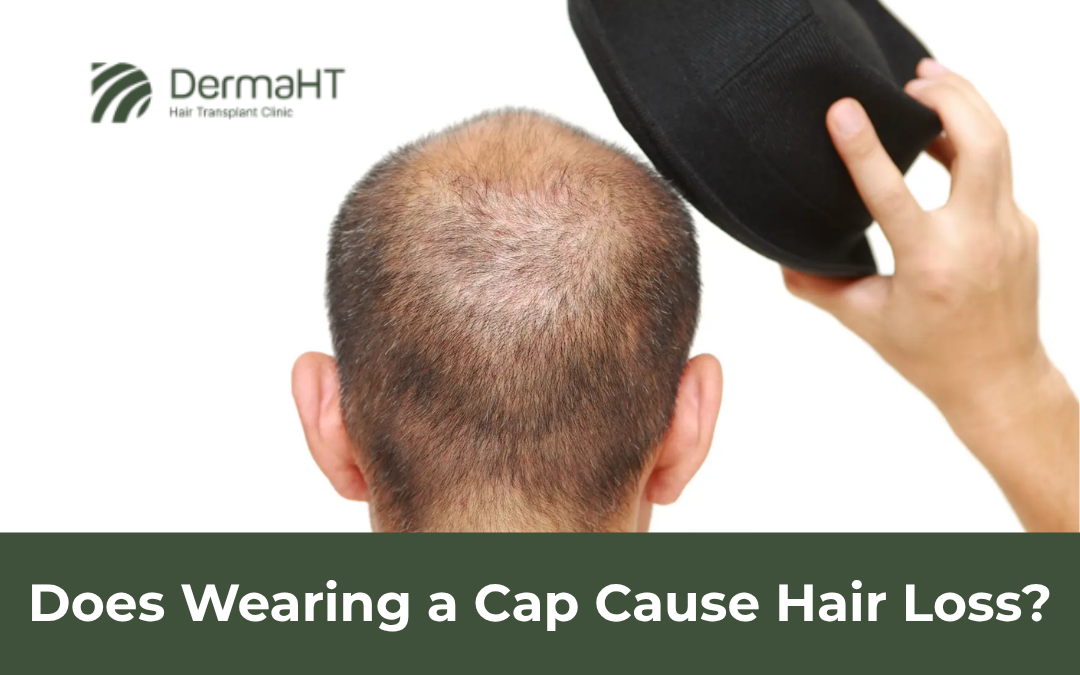
Wearing a cap does not cause baldness. Hair follicles draw their oxygen and nutrients from the blood supply beneath the scalp, not from the air, so a cap can’t starve or suffocate them. The only real risk comes from headwear worn very tightly over long periods, which can pull at the hairline and cause traction. In almost every other case, the true cause of hair loss lies elsewhere.
According to Dr. Nikitha Reddy, an MD Dermatologist offering Hair Transplant in Hyderabad, “I hear the cap theory almost every week. Caps don’t reach the follicle, so they can’t switch on pattern baldness, which is driven by genetics and hormones. What a very tight cap can do, over years, is tug at the edges, and that’s a different and preventable problem.”
Noticing thinning the cap can’t explain?
Can a cap actually cause hair loss?
For the most part, no. A cap sits on top of the hair, nowhere near the machinery that controls balding. The few real risks are specific and avoidable.
Follicles don’t suffocate. Hair gets its oxygen and nutrients from blood underneath the scalp, not from the air, so covering your head doesn’t starve the roots.
Pattern baldness is internal. Male and female pattern hair loss is driven by genetics and hormones, a process a cap has no contact with and can’t trigger.
Very tight wear is the exception. Headwear that pulls hard on the same spot every day can cause traction at the hairline, the one situation where a cap genuinely contributes.
Dirty caps irritate, not balding. A sweaty, unwashed cap can flare up dandruff or scalp irritation, but that’s a hygiene issue, not a cause of permanent loss.
So if hair is thinning under a cap you wear normally, the cap is almost certainly innocent, and the genetic thinning underneath is the kind of early loss a treatment like PRP is designed to slow.
What really causes hair loss?
If the cap is off the hook, it’s worth knowing what actually drives hair loss, since the real causes respond to real treatment.
Genetics and hormones. The most common cause by far is androgenetic alopecia, where follicles shrink under the influence of DHT, following a predictable pattern over years.
Tension over time. Constant pulling from tight ponytails, buns, turbans, or very tight caps can cause traction alopecia, which is reversible early but can scar if ignored.
Stress and illness. A physical or emotional shock can push hair into shedding a few months later, a temporary effect known as telogen effluvium that usually recovers on its own.
Nutrition and health. Thyroid problems, iron deficiency, and crash dieting all show up in the hair, which is why a real diagnosis looks past the obvious suspects.
Catching the real cause early opens up options, and our explainer on GFC covers one non-surgical route for thickening hair before thinning advances.
Why Choose Dr. Nikitha Reddy?
Dr. Nikitha Reddy is an MD Dermatologist, with 6+ years in hair restoration. Patients who come in blaming a cap usually leave with an actual diagnosis, because pinning down whether loss is genetic, tension-related, or temporary changes what comes next. Treating the right cause beats treating the convenient one.
📞 Call Now: +91 90639 77407
Frequently Asked Questions
Does wearing a hat every day cause baldness?
No, normal hat wearing doesn’t trigger genetic or pattern hair loss.
Can a tight cap damage my hairline?
Yes, if worn very tightly for long periods, it can cause traction.
Do caps make the scalp unable to breathe?
No, follicles get oxygen from blood, not from the air.
Can washing my cap help my hair?
A clean cap prevents scalp irritation, but won’t reverse real hair loss.
References :
National Center for Biotechnology Information. Traction Alopecia. https://www.ncbi.nlm.nih.gov/books/NBK470434/
National Center for Biotechnology Information. Androgenetic Alopecia. https://www.ncbi.nlm.nih.gov/books/NBK430924/