
You had your baby. The sleepless nights, the feeds, the endless laundry. And then, around three or four months in, you notice clumps of hair on your pillow, in the shower drain, on your hairbrush. It feels alarming. Is something wrong?
The short answer is: probably not. Postpartum hair loss is one of the most common things new mothers experience, and in most cases it sorts itself out. But knowing that does not make it any less stressful when it is happening to you. In this blog, Dr. Nikitha Reddy, MD Dermatologist and Hair Transplant Surgeon at DermaHT, the clinic best known for hair transplant in Hyderabad, explains why postpartum hair loss happens, when it is normal, and what hair loss treatment postpartum actually works. No scary talk. Just clear, honest information.
What Is Postpartum Hair Loss? (And Why It Happens)
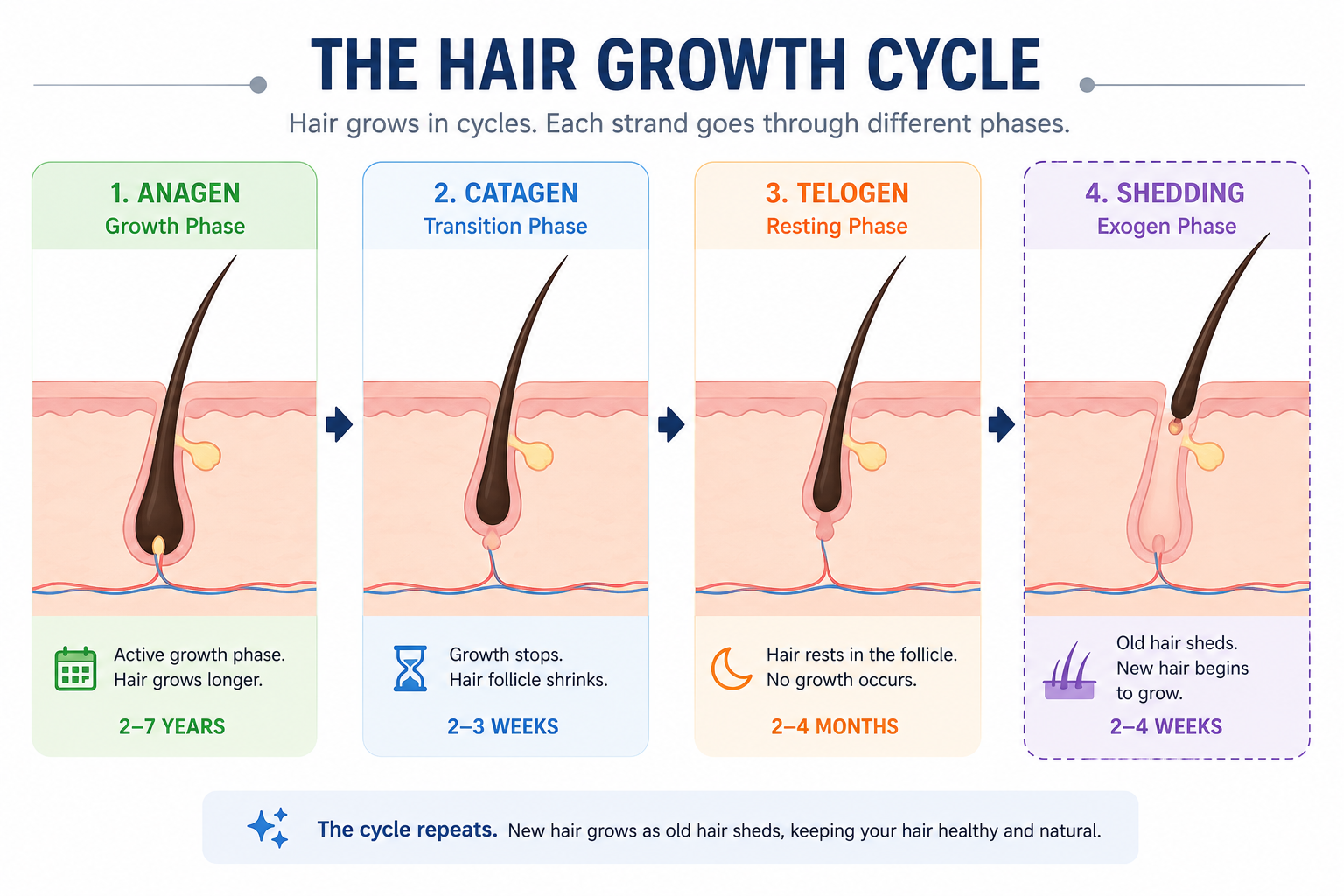
Postpartum hair loss has a proper medical name: telogen effluvium. It is not a disease. It is your body resetting itself after pregnancy. Here is what is actually going on, step by step:
- During pregnancy: High estrogen levels keep your hair in the growing phase for longer. Hair you would normally shed simply stays put. This is why so many women feel their hair looks thicker and fuller when pregnant.
- After delivery: Hormone levels drop sharply. All that hair which was “on hold” suddenly enters the shedding phase at the same time.
- The result: Around two to four months after delivery, you start losing that built-up hair all at once. It looks dramatic, but it is your hair cycle catching up.
So when you see more hair falling than usual, it is not that you are losing extra hair. It is that you are losing the hair you “saved” during pregnancy, all in one go.
Dr. Nikitha Reddy says: “Most new mothers panic when they see the shedding. I always reassure them first. In a vast majority of cases, this is a temporary phase that recovers on its own within six to twelve months. The job of a dermatologist is to rule out anything else going on and support the scalp while it recovers.”
When Does Postpartum Hair Loss Start and Stop?
This is the question almost every new mother asks. Here is an honest timeline:
- Month 1 to 2: Usually no major shedding yet. Hormones are still settling.
- Month 3 to 4: Peak shedding. This is when most women notice it and start worrying.
- Month 6 to 9: Shedding slows down. New baby hairs (those short wispy strands near the hairline) start appearing.
- Month 12: For most women, hair density returns close to normal.
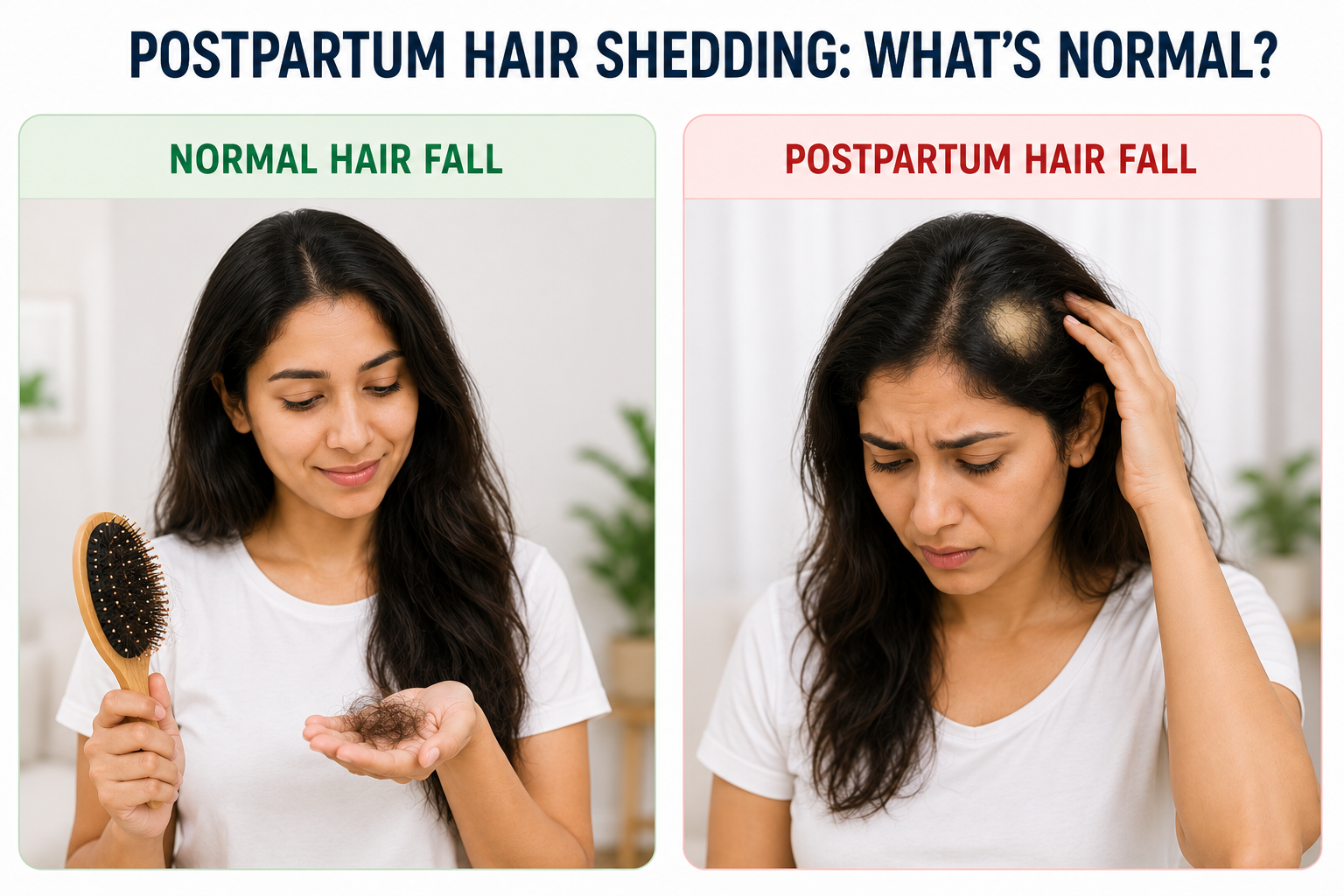
Your shedding is still heavy beyond twelve months, or if you notice bald patches rather than overall thinning, that is your cue to see a dermatologist. It may not be simple postpartum shedding.
That’s our cue, not yours.
Is It Normal or Should You Worry?
Most postpartum hair loss is completely normal. But there are a few situations where it is worth getting checked. See a doctor if:
- The shedding continues heavily past one year
- You notice distinct bald patches rather than even thinning
- Your scalp is itchy, flaky, red, or painful
- You also feel constantly tired, cold, or low (this could point to thyroid issues or anaemia, both common after delivery)
- Your hairline is receding in a pattern (this could be female pattern hair loss, separate from postpartum shedding)
Dr. Nikitha Reddy says: “Pregnancy and breastfeeding drain your iron, vitamin D, and other nutrient stores. Sometimes what looks like simple postpartum shedding is actually a deficiency that is easy to correct. A quick blood test tells us a lot. Never self-diagnose, get the right tests done first.”
Hair Loss Treatment Postpartum: What Actually Works
The good news is that postpartum hair loss usually does not need aggressive treatment. The focus is on supporting recovery, not forcing it. Here is what genuinely helps:
- Nutrition first: Iron, protein, vitamin D, biotin, and zinc are the building blocks of healthy hair. A balanced diet rich in leafy greens, eggs, nuts, and lean protein does more than any expensive shampoo.
- Correcting deficiencies: If blood tests show low iron or vitamin D, supplements (prescribed by your doctor) make a real difference.
- Gentle hair care: Avoid tight ponytails, harsh chemical treatments, and excessive heat styling during this phase. Be kind to fragile new hair.
- A safe scalp routine: Mild, sulphate-free shampoos and a clean, healthy scalp environment support regrowth.
- Patience: This is the hardest one. In most cases, time is the real treatment.
For mothers who have finished breastfeeding and whose shedding has not recovered, a dermatologist may suggest in-clinic options. At DermaHT, treatments like scalp mesotherapy deliver vitamins and nutrients directly to the follicles, and regenerative options such as exosome therapy are discussed only when appropriate and safe for your stage of motherhood.
Not sure whether your shedding is normal or needs attention? Before you spend money on random hair products, get a proper scalp assessment from Dr. Nikitha Reddy at DermaHT Hair Transplant Clinic, Kokapet, Hyderabad. One honest consultation can save you months of worry.
That’s our cue, not yours.
What About Hair Transplant for Postpartum Hair Loss?
This is an important point, so read it carefully. Postpartum hair loss is almost never treated with a hair transplant. Telogen effluvium is temporary, and the hair grows back on its own. A transplant moves existing follicles around. It does nothing for a shedding cycle that is going to reverse anyway.
A hair transplant only comes into the conversation if, separately from your postpartum phase, you have genuine female pattern hair loss with permanent thinning that does not recover. Even then, a good dermatologist will first try non-surgical options and only consider surgery as a last step. Some women who have already had a procedure also ask whether a second hair transplant is possible later, which is a separate discussion entirely.
Dr. Nikitha Reddy says: “I tell every new mother the same thing: do not rush into any procedure during the postpartum phase. Your hair is still recovering. The smartest thing you can do right now is nourish your body, be patient, and let us monitor your scalp. Surgery, if ever needed, is a decision for much later, not for the middle of a shedding cycle.”

Simple Habits That Support Hair Recovery After Delivery
While you wait for your hair cycle to reset, these everyday habits genuinely help:
- Eat balanced, iron and protein rich meals (your hair and your energy both benefit)
- Stay hydrated through the day
- Take any prescribed postnatal supplements consistently
- Sleep whenever you can (easier said than done with a newborn, we know)
- Manage stress where possible, as high stress can prolong shedding
- Skip tight hairstyles and aggressive brushing for now
- Use a soft, wide-toothed comb on wet hair
None of these are miracle cures. But together, they create the right environment for your hair to bounce back faster.
What Does Dr. Nikitha Reddy Recommend?
At DermaHT Hair Transplant Clinic in Hyderabad, postpartum patients are never pushed toward procedures. The approach is calm, medical, and personalised. Dr. Nikitha Reddy, MD Dermatologist and Hair Transplant Surgeon, typically:
- Confirms whether the shedding is genuine telogen effluvium or something else
- Recommends blood tests to check iron, vitamin D, and thyroid levels
- Guides nutrition and a gentle scalp care routine
- Monitors recovery over a few months
- Suggests in-clinic treatments only if recovery stalls and only when safe for your stage
Dr. Nikitha Reddy says: “Motherhood already comes with enough to worry about. Hair loss should not be one more thing keeping you up at night. With the right reassurance, the right tests, and a little patience, almost every mother I see gets her hair back. My role is to walk that journey with her, not to sell her a treatment she does not need.”
Frequently Asked Questions
1. How long does postpartum hair loss last?
For most women, postpartum hair loss begins around three to four months after delivery and resolves on its own within six to twelve months. If heavy shedding continues beyond a year, it is best to consult a dermatologist to rule out other causes like iron deficiency or thyroid issues.
2. Will my hair grow back after pregnancy?
Yes, in the vast majority of cases. Postpartum shedding (telogen effluvium) is temporary. As your hormones stabilise, your hair cycle returns to normal and the lost hair regrows. You may notice short “baby hairs” near your hairline as new growth begins.
3. Can I do anything to stop postpartum hair loss?
You cannot fully “stop” the natural shedding, but you can support faster recovery. A nutrient-rich diet, correcting any iron or vitamin D deficiency, gentle hair care, and managing stress all help. A dermatologist can guide you on what your specific scalp needs.
4. Is hair transplant needed for postpartum hair loss?
No. Postpartum hair loss is temporary and recovers naturally, so a hair transplant is not the treatment for it. Surgery is only considered for permanent hair loss, such as female pattern baldness, and only after non-surgical options have been explored.
5. Are hair treatments safe while breastfeeding?
Many in-clinic treatments are best postponed until after breastfeeding. This is why a personalised consultation matters. A qualified dermatologist will recommend only what is safe for your specific stage of motherhood and will never rush you into a procedure.
References:
- American Academy of Dermatology (AAD) – Hair Loss in New Mothers https://www.aad.org/public/diseases/hair-loss/insider/new-moms
- National Center for Biotechnology Information (NCBI) – Telogen Effluvium: A Review https://www.ncbi.nlm.nih.gov/pmc/articles/PMC6315105/
- DermNet NZ – Telogen Effluvium https://dermnetnz.org/topics/telogen-effluvium
Disclaimer: The information shared in this content is for educational purposes only and not for promotional use.