
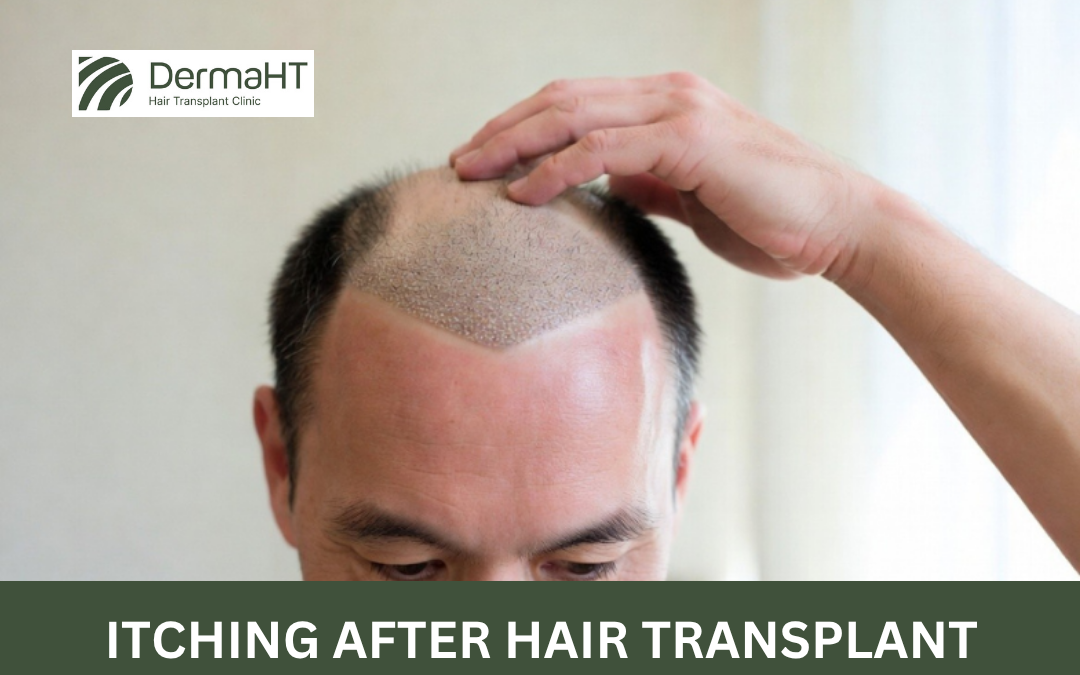
That maddening itch a week or two after your procedure? Almost everyone gets it. It feels like a setback, but it usually means the opposite. Your scalp is healing, nerves are waking up, and new follicles are settling in. Still, the urge to scratch can be hard to ignore, and scratching is exactly what you must not do.
This guide walks you through why the itching starts, how long it lasts, what actually helps, and the few warning signs worth a call to your surgeon for hair transplant in Hyderabad.
Two weeks in and ready to claw your scalp off?
Hold that hand. Read on first, then let Derma HT settle your mind in five minutes flat.
Is Itching After a Hair Transplant Normal?

Yes. Itching is one of the most common things patients report in the first few weeks. It is part of the normal wound-healing response, not a sign that something has gone wrong.
When grafts are placed, tiny incisions are made across the recipient and donor areas. As these heal, the skin produces histamine and forms small scabs. Both trigger that familiar itchy feeling. Dry, flaking skin around the new grafts adds to it.
What Causes Itching After Hair Transplant?
Several things happen at once during recovery, and most of them feed the itch.
Healing scabs. Small crusts form over each graft. As they dry and loosen, they pull slightly on the skin and itch.
Nerve regeneration. The incisions briefly disturb tiny nerve endings. As nerves repair themselves, you may feel tingling, numbness, or itching. A reassuring sign, oddly enough.
Dryness. Hospitals and air-conditioned rooms dry the scalp. Dry skin is itchy skin.
Histamine response. Your body’s natural inflammation chemicals rise during healing and stimulate itch receptors.
Knowing the cause matters, because the fix depends on it. Persistent, worsening itch with redness or pus is a different story, covered further down.
“Most patients are surprised when I tell them the itch is a healing signal, not a complication. The grafts are settling and the nerves are waking up. It’s the scratching, not the itching, that does the damage.” – Dr. Nikitha Reddy, Derma HT
How Long Does the Itching Last?
For most people, the itch peaks somewhere between day 5 and day 14, then fades as the scabs fall away on their own. By the third or fourth week, the scalp usually feels calm again.
A rough timeline:
- Days 1–4: Mild tightness, little itching yet.
- Days 5–14: Peak itching as scabs form and dry.
- Weeks 3–4: Itching settles as the skin heals over.
- Beyond 4 weeks: Occasional itch is fine; constant or severe itch is worth checking.
Everyone heals at their own pace, so do not panic if your timeline runs slightly longer.
Stuck past week four and still itchy?
That’s our cue, not yours.
How to Relieve Itching Safely
Here is the golden rule: do not scratch. Scratching can dislodge grafts in the first ten days and undo expensive, careful work. Try these instead.
Follow your washing routine. Gentle, surgeon-approved washing from around day 3 softens scabs and removes buildup that fuels itching. Pat, never rub.
Keep the scalp moisturised. A saline spray or a recommended moisturising lotion calms dryness. Ask before applying anything yourself.
Use prescribed relief only. Some surgeons suggest a mild antihistamine or a specific topical to ease the itch. Use only what your doctor approves.
Stay cool and hydrated. Heat and sweat make itching worse. Drink water and avoid hot, humid environments early on.
Tap, do not scratch. If the urge is unbearable, gently tap the area with a clean fingertip rather than scratching.
If you want a routine matched to your exact procedure, the team at Derma HT can map out a simple day-by-day aftercare plan for you.
“I tell every patient the same thing: your hands are the biggest risk in the first ten days. Keep the scalp clean, keep it moisturised, and trust the routine we give you. The urge fades faster than people expect.” – Dr. Nikitha Reddy, Derma HT
When Should You See Your Doctor?
Most itching resolves on its own. A few signs, though, deserve professional attention:
- Itching that intensifies instead of fading after two weeks
- Spreading redness, swelling, or warmth
- Pus, oozing, or a bad smell
- Small painful bumps (possible folliculitis)
- Fever alongside scalp discomfort
These can point to infection, irritation, or an allergic reaction, all very manageable when caught early. A quick consultation clears things up fast.
Spotting any of these?
Don’t wait it out and don’t Google it at 2 a.m.
Conclusion
Itching after a hair transplant is usually a good sign. It means your scalp is healing and your new follicles are settling into their home. The discomfort is temporary, and with gentle care, the right washing routine, and a bit of patience, it passes within a few weeks.
The single most important thing you can do is resist the scratch. Beyond that, lean on your aftercare instructions and trust the process.
If you are unsure whether your itching is normal or you would simply like peace of mind, it never hurts to drop by Dr. Nikitha Reddy at Derma HT, for a quick check. A short visit can turn worry into reassurance, and keep your results on track. Your future hairline will thank you for the patience now.
Frequently Asked Questions
Is itching after a hair transplant a sign of infection?
Usually no. Mild itching is normal healing. Infection brings extra signs like spreading redness, pus, swelling, or fever
Can I scratch my scalp if the itching is unbearable?
No. Scratching can dislodge grafts in the first ten days. Gently tap the area with a clean fingertip instead.
When can I wash my hair to reduce itching?
Most surgeons allow gentle washing from around day 3. Follow the exact routine Derma HT gives you.
How long does itching after a hair transplant last?
It usually peaks between day 5 and day 14, then fades by week three or four as scabs fall away.
Does itching mean my hair transplant is working?
Often, yes. Itching and tingling can signal nerve regeneration and healing, both good signs in early recovery.
References:
- International Society of Hair Restoration Surgery (ISHRS) – Post-operative care and recovery guidance. https://ishrs.org
- American Academy of Dermatology (AAD) – Hair transplant recovery and scalp wound healing. https://www.aad.org
- National Library of Medicine (PubMed/NIH) – Wound healing, histamine response, and post-surgical pruritus. https://pubmed.ncbi.nlm.nih.gov
Disclaimer: The information shared in this content is for educational purposes only and not for promotional use.