
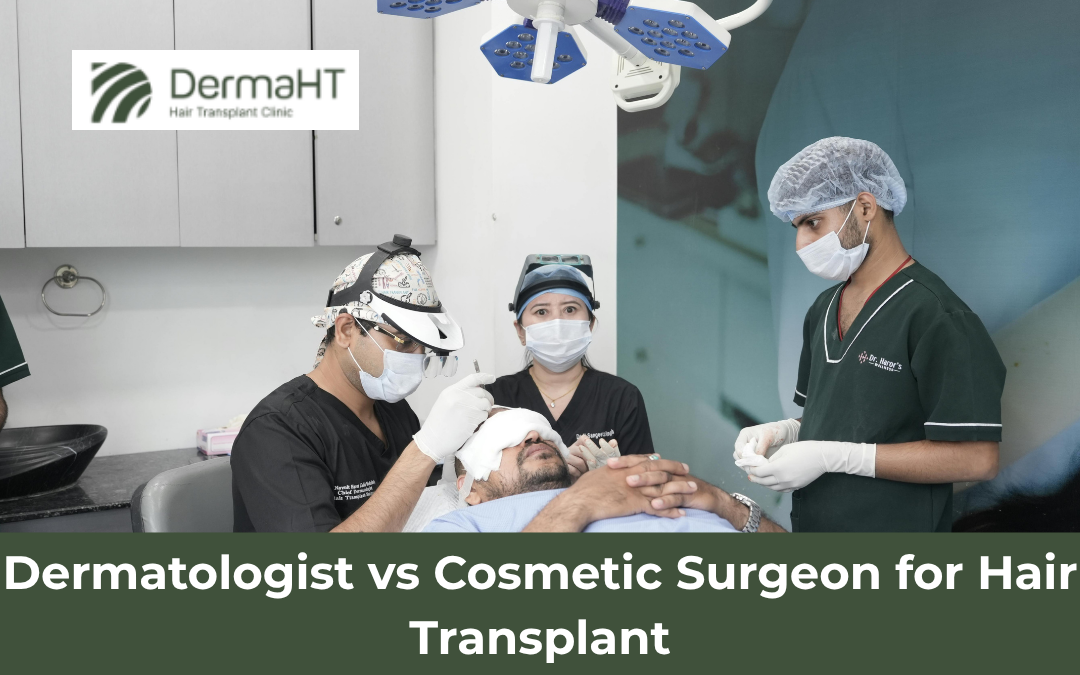
Both dermatologists and cosmetic surgeons perform hair transplants, so the real question isn’t the job title on the door. It’s whether the doctor can first work out why your hair is falling, then carry out the surgery cleanly. A dermatologist’s edge is the diagnosis. A surgeon’s edge is operative experience, and the best results come from whoever brings both to your case.
According to Dr. Nikitha Reddy, an MD Dermatologist offering Hair Transplant in Hyderabad, “A transplant is only as good as the diagnosis behind it. If you move hair without knowing what caused the loss, you can end up transplanting into a scalp that keeps shedding.”
Here is a quick breakdown of how the two specialties differ across key aspects of hair restoration.
|
Aspect |
Dermatologist |
Cosmetic Surgeon |
|
Core focus |
Skin and hair |
Aesthetic surgery |
|
Diagnosing cause |
Primary strength |
Less emphasis |
|
Medical therapy |
Prescribes too |
Surgery focused |
|
Base training |
Dermatology, trichology |
Surgical specialty |
Want a proper diagnosis before any surgery talk?
What does a dermatologist bring to hair restoration?
A dermatologist’s training centers on skin, scalp, and hair, which shapes what happens before the transplant even starts.
Diagnoses the cause. Hair loss can come from genetics, thyroid issues, nutrition, or autoimmune conditions, and a dermatologist works out which one is driving yours before anyone plans grafts.
Reads the scalp. Scalp and skin health sit at the core of dermatology, so the ground your grafts go into gets assessed properly rather than assumed to be healthy.
Manages medical therapy. Options like minoxidil, finasteride, and PRP are prescribed and tracked by dermatologists, which often protects the native hair sitting around a transplant.
Spots poor candidates. Some hair loss won’t hold a transplant, and catching that early saves a patient from surgery that was always going to disappoint.
That assessment gives the surgery something solid to build on, since a clean FUT result leans as much on picking the right patient as on the technique.
So how do you actually choose?
The title alone won’t tell you who’s good. These are the things worth checking, whichever specialty the doctor trained in.
Hair transplant volume. How many hair transplants the doctor has personally done matters far more than the letters after their name.
Real result photos. Ask to see their own before-and-after cases, not stock images or borrowed examples.
A diagnosis first. A good doctor explains why your hair is thinning before talking about grafts, whatever their base specialty.
Follow-up and aftercare. Results take months to show, so ongoing review counts for more than a polished first consultation.
That same honest judgment shows up in smaller calls too, like whether someone is even at the right age for surgery yet, rather than booking every patient who asks.
Why Choose Dr. Nikitha Reddy?
Dr. Nikitha Reddy is an MD Dermatologist with 6+ years focused on hair restoration. Every consultation at DermaHT starts with finding out why your hair is thinning, the part a dermatology background is built for, before any talk of grafts or surgery dates. The diagnosis leads, because a transplant only works when it’s aimed at the right problem.
📞 Call Now: +91 90639 77407
Frequently Asked Questions
Can a dermatologist perform a hair transplant?
Yes, Dermatologists trained in hair restoration perform them regularly.
Is a cosmetic surgeon better for hair transplants?
Not automatically, hair-specific experience matters more than base specialty.
Why diagnose hair loss before a transplant?
A transplant fails if the real cause of shedding goes untreated.
What should I check before choosing?
Their transplant volume, real result photos, and honest case selection.
References :
National Center for Biotechnology Information. Alopecia. https://www.ncbi.nlm.nih.gov/books/NBK538178/
National Center for Biotechnology Information. Androgenetic Alopecia. https://www.ncbi.nlm.nih.gov/books/NBK430924/