
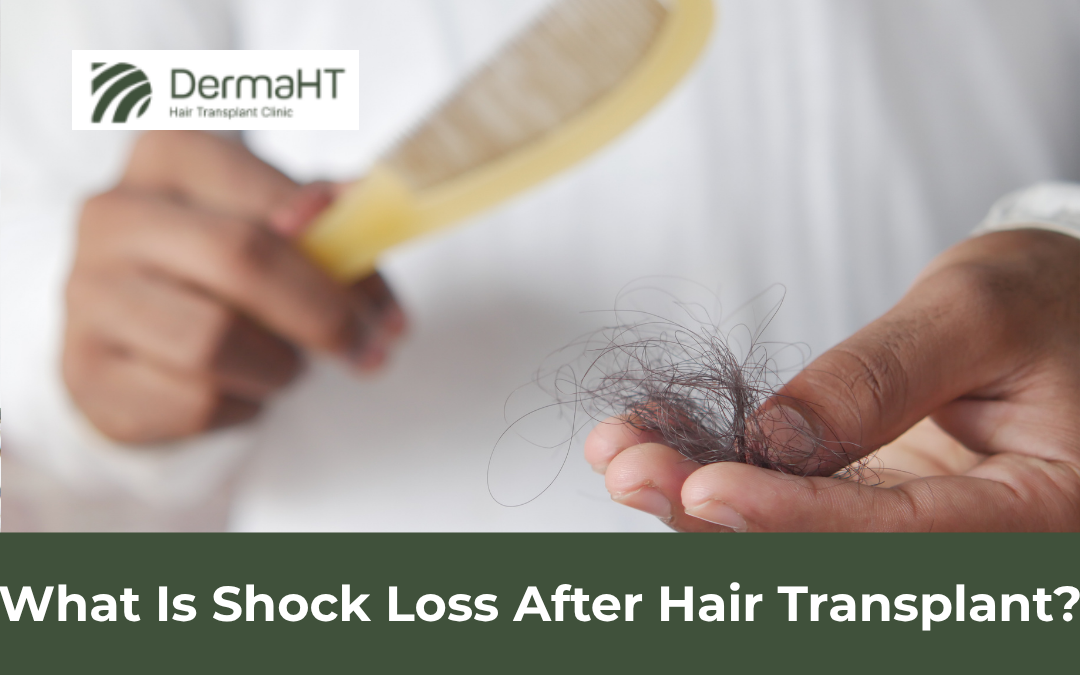
Shock loss is the temporary shedding of the transplanted hair after a hair transplant, and it usually happens around two to four weeks after surgery. It’s a normal, expected part of the process: the grafted hair shafts fall out while the follicles stay alive under the skin, then push out new hair from around the third or fourth month. It can look alarming, but the shedding is a sign the follicles are resetting, not that the transplant has failed. Some of the surrounding native hair occasionally sheds too, and that grows back as well.
According to Dr. Nikitha Reddy, an MD Dermatologist offering Hair Transplant in Hyderabad, “Almost every patient sees the transplanted hair fall out in the first few weeks, and almost every patient panics. What’s shedding is the hair shaft, not the graft. The follicle stays put and grows a new hair a few months later.”
Seeing your transplanted hair shed?
Why does shock loss happen after a transplant?
Shock loss isn’t a sign the transplant failed. It’s the grafted follicles reacting to surgery, and a few specific things set it off.
Surgical trauma. Extracting and re-implanting follicles is a shock to them, and that stress alone pushes the grafted hairs into an early resting phase where they let go of the shaft.
Interrupted blood supply. A newly placed graft is briefly cut off from its blood supply until it reconnects, and during that gap the hair shaft is shed while the follicle conserves itself.
The resting-phase reset. The grafts drop into telogen, the resting stage, and hairs in telogen release the strand they were holding, which is exactly what the early shedding is.
Surrounding native hair. Sometimes the trauma also tips nearby existing hairs into shedding, which recovers as well, though the transplanted hair is the main story here.
How gently the grafts are handled and placed affects how they settle through this phase, which is part of what careful FUE work is built around.
When does the transplanted hair grow back?
The shedding phase follows a fairly set timeline, and knowing it ahead of time removes most of the worry.
Weeks 2 to 4. The transplanted hair starts to shed. This is the stage the clinic calls shock loss, and it’s an expected part of the process rather than a problem.
Months 1 to 3. The follicles rest quietly under the skin. The scalp can look flat and it may feel like nothing is happening, but the roots are simply preparing to grow.
Month 3 to 4. New growth begins. The rested follicles re-enter their growth phase and fine new hairs start pushing through.
Month 6 to 12. Density fills in. The regrown hair thickens and lengthens, with the final result usually settling by around a year.
This shedding sits inside the wider healing curve rather than apart from it, and the month-by-month markers in our FUE recovery guide show where it fits before regrowth takes over.
Why Choose Dr. Nikitha Reddy?
Dr. Nikitha Reddy is an MD Dermatologist with 6+ years in hair restoration. Every transplant plan at DermaHT includes a frank conversation about shock loss before surgery, not after the shedding has already started, because patients who know it’s coming handle those weeks far better than the ones caught off guard. Honest expectations do more for results than any reassurance offered too late.
📞 Call Now: +91 90639 77407
Frequently Asked Questions
Is shock loss after a hair transplant permanent?
No. The shed hair regrows, usually from around month three or four.
When does shock loss start after surgery?
Usually two to four weeks after the transplant.
Does shock loss mean the transplant failed?
No. Shedding of the transplanted hair is a normal part of the process.
Does shock loss affect existing hair too?
Sometimes, and that hair generally grows back as well.
References
National Center for Biotechnology Information. Complications in Hair Transplantation. https://pmc.ncbi.nlm.nih.gov/articles/PMC6371733/
National Center for Biotechnology Information. Complications of Hair Transplant Procedures: Causes and Management. https://pmc.ncbi.nlm.nih.gov/articles/PMC8719980/